
8K Dome LED Display for 360° Immersive Cinema
Cinema continues to evolve beyond traditional flat screens. Today, audiences expect deeper immersion and more engaging visual experiences.A dome LED display can create this transformation through curved visuals and panoramic storytelling. It combines high-resolution imaging with an immersive spherical structure.Unlike standard front-facing screens, a dome structure surrounds the audience with visual content. Therefore, creators can build experiences that feel more spatial and natural.
The LED Dome Screen uses an acoustic-transparent structure for this purpose.Micro-perforations allow sound to pass through the display surface.As a result, speakers can work behind the screen without disrupting the visual field. This design supports closer synchronization between sound and images.
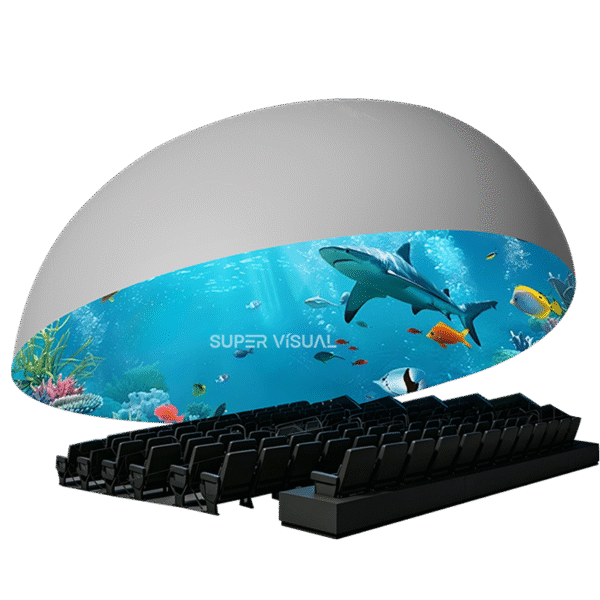
The system features an impressive 16-meter giant dome structure. It also supports customized pixel pitches from P1.45 to P3.Moreover, the display can deliver 8K ultra-HD content across its curved surface. This capability creates a detailed environment for immersive cinema and education.
Why Do Traditional Cinema Formats Limit Immersive Experiences?
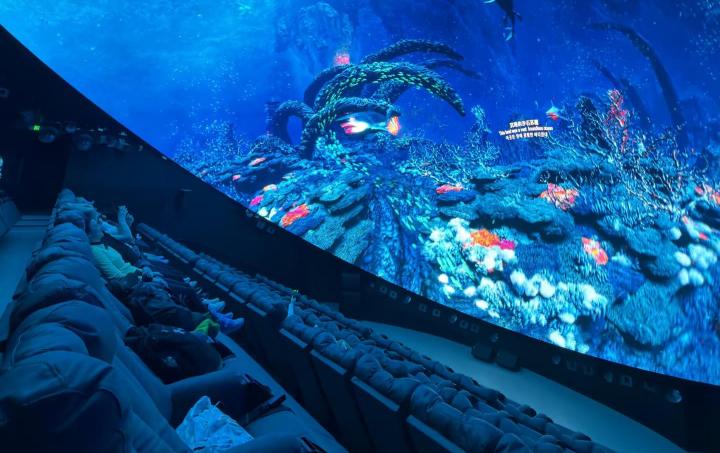
Traditional cinema screens usually focus visual attention toward one direction. This format works well for many conventional storytelling applications.However, some experiences require broader visual coverage. For example, astronomy, flight simulation, underwater exploration, and cultural storytelling benefit from spatial presentation.A dome LED display addresses this requirement through its curved architecture. The screen can surround viewers and reduce the feeling of watching a distant image.
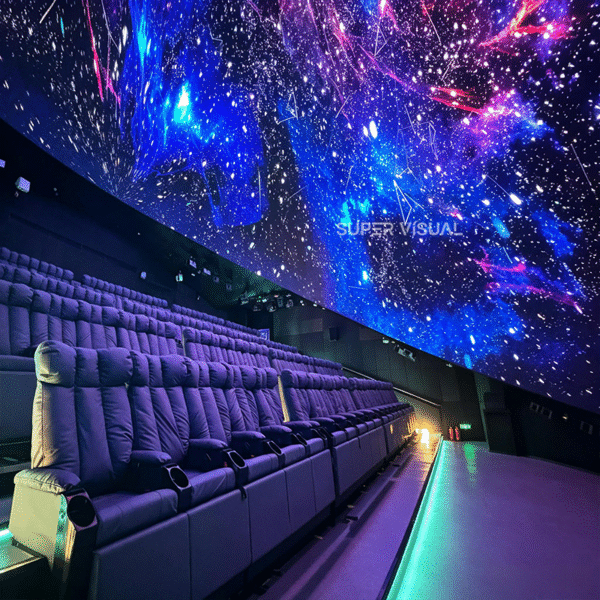
Furthermore, creators can design content for a 360-degree visual environment. This approach allows audiences to explore scenes from different perspectives.For example, a planetarium can display a moving galaxy across the dome. Viewers can experience the environment as an expansive celestial space.
How Can an LED Dome Screen Improve Audio-Visual Synchronization?
Immersive cinema needs more than high-resolution images. Sound placement also influences how audiences perceive spatial environments.The LED Dome Screen uses micro-perforations for acoustic transparency. Therefore, sound can travel through the display surface.Speakers can sit behind the screen while maintaining the visual structure. This setup helps align sound sources with displayed scenes.For example, a film may show a waterfall across the dome. The sound system can reproduce flowing water from the corresponding direction.
Similarly, wind effects can move around the audience. This technique creates a more convincing connection between visual movement and sound.The design therefore supports a stronger audio-visual relationship. It can also help content creators develop more immersive storytelling.
Technical Solution: Acoustic Transparency and High-Resolution Imaging
The display combines several technologies to support immersive presentation. Each feature contributes to the overall viewing experience.First, micro-perforated LED modules provide acoustic transparency. They allow sound waves to travel through the screen structure.Second, the curved LED architecture supports panoramic visual presentation. The system can cover a large spherical viewing environment.Third, the display supports refresh rates of at least 7680Hz. This high refresh rate helps reproduce fast-moving visual content smoothly.
The system also provides brightness of at least 600 nits. This level supports clear image presentation in suitable indoor environments.Furthermore, the display supports grayscale performance of at least 14Bit. Therefore, content creators can achieve smoother tonal transitions.The physical gap can remain at or below 0.3mm. This design supports a visually continuous curved surface.The screen also uses magnetic module fixing. Consequently, technicians can access the front side during maintenance.These features create a practical foundation for immersive LED applications. They also support customized designs for different architectural environments.
Can an 8K Dome LED Display Create a 360° Journey?
An 8K visual environment can provide significantly more image detail. However, resolution alone does not create immersion.The physical structure plays an equally important role. A curved dome can extend the visual field beyond a conventional rectangular frame.Content designers can use this space for continuous visual storytelling. They can also create movement across multiple viewing directions.For example, imagine an underwater exploration film. A whale can move across the upper dome before disappearing behind the viewer.
Meanwhile, panoramic audio can follow the movement. Motion seats can also respond to selected scenes.This combination creates a more interactive cinema environment. It connects image, sound, movement, and physical space.Therefore, an immersive LED display can become more than a viewing surface. It can become part of the storytelling environment.For more product configurations and related LED solutions, explore the LED Dome Screen Product Category.
How Does a 16-Meter Dome Support Large-Scale Applications?
Large immersive spaces require carefully coordinated visual and structural design. The 16-meter dome provides a strong foundation for large audiences.Its customized construction allows different project sizes and layouts. Therefore, integrators can adapt the display to specific architectural requirements.The system supports pixel pitches from P1.45 to P3. Smaller pixel pitches provide higher pixel density.For example, P1.45 reaches approximately 475,624 dots per square meter. P3 provides approximately 111,111 dots per square meter.
Project teams can therefore select suitable specifications based on viewing distance. The best viewing distance ranges from approximately 1 meter to 50 meters.This flexibility supports different applications and audience arrangements. It also allows designers to balance resolution, project scale, and budget.
Why Is a Dome LED Display Valuable for Science Education?
Science centers need to explain complex concepts in an understandable way. Immersive visualization can help transform abstract information into spatial experiences.A dome LED display can simulate planets, galaxies, oceans, and atmospheric systems. Therefore, educators can create visual environments around their audiences.For example, a science center can simulate a journey through the solar system. The audience can observe planetary movement from multiple directions.Planetariums can also use the display for astronomy presentations. High-resolution content can show detailed celestial structures across the dome.Additionally, the spherical environment supports interactive educational content. Students can explore scientific concepts through visual storytelling.This approach can make educational spaces more engaging. It can also support presentations, exhibitions, and special events.
How Can an LED Dome Enhance Cultural Tourism?
Cultural tourism increasingly focuses on immersive visitor experiences. Visitors want more than static displays and conventional exhibitions.An LED dome can create a large-scale digital environment for cultural storytelling. It can combine scenery, music, movement, and local narratives.For example, a tourism center can recreate an ancient landscape. Visitors can experience historical environments through panoramic digital scenes.Theme parks can also create simulated flight experiences. A curved display can show mountains, forests, rivers, and cities around the audience.Moreover, jungle adventures can use dynamic environmental effects. Sound, visuals, and motion seats can work together for stronger immersion.This format gives cultural venues more creative flexibility. It can also support seasonal shows and temporary exhibitions.
What Technical Specifications Support Immersive Performance?
The LED Dome Screen provides several specifications for professional applications. These specifications help project teams select suitable configurations.
| Parameter | Specification | Application Value |
| Product | LED Dome Screen | Immersive spherical display |
| Structure | Acoustic-transparent spherical display | Supports panoramic sound |
| Dome Diameter | 16 meters | Large-scale immersive venues |
| Pixel Pitch | P1.45–P3 | Flexible resolution selection |
| Brightness | ≥600 nits | Clear visual presentation |
| Refresh Rate | ≥7680Hz | Smooth fast-motion content |
| Grayscale | ≥14Bit | Detailed tonal transitions |
| Physical Gap | ≤0.3mm | Seamless visual appearance |
| Viewing Angle | H140° / V140° | Wide audience coverage |
| Screen Weight | ≤30kg/m² | Supports structural planning |
| Power Consumption | <220W/m² average | Efficient operation |
| Maximum Power | <600W/m² | Peak operating reference |
| Input Voltage | AC110V–AC220V | Flexible electrical integration |
| Working Temperature | -20°C to +60°C | Wide operating range |
| Working Humidity | 10%–95% | Adaptable installation conditions |
| LED Lifespan | ≥100,000 hours | Long-term application potential |
| Maintenance | Front maintenance | Convenient service access |
| Control System | Mooncell / Kystar / Nova / Colorlight | Flexible system integration |
Certification requirements should follow the specific project and product configuration. Buyers should confirm applicable certifications with the supplier before ordering.
For installation planning, system integration, and display technology information, visit the LED Display Technical Guide.
What Makes the LED Dome Screen Suitable for Custom Projects?
Every immersive venue has different architectural conditions. Therefore, a fixed display format cannot satisfy every project.The LED Dome Screen supports customized sizes and pixel-pitch configurations. Integrators can adapt the solution to different dome structures.The lightweight curved panels also support geometric customization. At the same time, the acoustic-transparent structure preserves sound transmission.
Project teams can therefore coordinate screen design with audio architecture. They can also integrate panoramic sound and motion seating.This flexibility benefits science centers, planetariums, theme parks, and cultural venues. It also supports immersive theaters and specialized exhibition spaces.
How Can Integrators Build a Complete Immersive Experience?
A successful immersive venue requires coordinated hardware and content. The LED display forms the primary visual layer.Next, a panoramic sound system adds spatial audio information. Motion seats can then provide synchronized physical feedback.Content creators should design scenes specifically for curved environments. They should also consider viewing angles and audience positions.For example, an ocean scene can combine moving waves with directional water sounds. Motion seats can add subtle movement during major visual events.As a result, audiences can experience multiple sensory signals together. This approach creates a stronger sense of presence.The dome LED display therefore becomes part of an integrated experience. It does not simply function as a large digital screen.
Conclusion: Can an 8K LED Dome Turn Cinema Into a Journey?
An 8K LED dome can transform how audiences experience digital content. Its curved architecture creates a broad visual environment around viewers.The LED Dome Screen adds acoustic transparency through micro-perforated LED technology. Therefore, audio and visual systems can work together more naturally.Its 16-meter structure supports large-scale immersive venues. Meanwhile, customized P1.45–P3 configurations provide flexible resolution choices.The ≥7680Hz refresh rate supports smooth visual performance. The ≥600 nits brightness also supports clear image presentation.
Most importantly, the system connects visuals, sound, and motion. This combination can turn cinema into a more engaging spatial journey.For science education, cultural tourism, theme parks, and immersive theaters, this format offers significant creative potential.As immersive entertainment continues to evolve, dome LED technology provides a flexible platform for new storytelling formats.



Add comment