
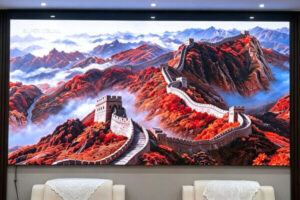
In the post-traffic era, traditional brick-and-mortar spaces face massive growth stagnation. Furthermore, homogeneous customer experiences and a total lack of brand memory plague modern offline venues. Traditional flat LED screens offer only one-way, static information broadcasting. Consequently, they fail to attract user attention or inspire social sharing. Therefore, their marketing impact declines significantly year by year.
Conversely, Commercial LED Spherical Displays offer a definitive visual solution for offline traffic activation. This creative hardware leverages three core advantages: spherical visual differentiation, 360-degree omnidirectional communication, and lightweight spatial adaptation.
Today, these specialized screens are expanding rapidly into five major fast-growing sectors. These industries include commercial retail, interactive entertainment, digital education, public landscapes, and premium niche markets.
Commercial Retail: The Primary Traffic Driver
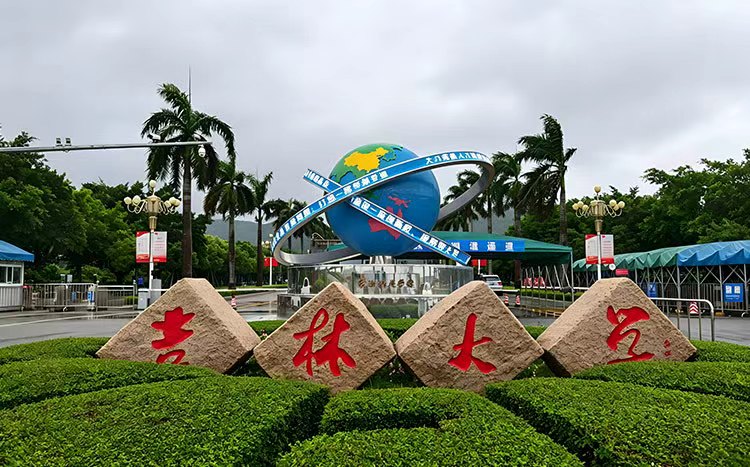
Commercial retail remains the largest market for spherical screens, accounting for 52% of total global installations. Specifically, operators deploy Commercial LED Spherical Displays in three main areas: shopping mall atriums, flagship stores, and major trade exhibitions.
Mall Atriums
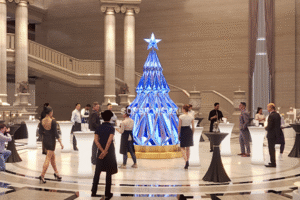
Malls usually choose medium-sized spherical LED screens with diameters ranging from 2 to 6 meters. These screens hang safely in empty vertical spaces. Consequently, they do not block pedestrian traffic lines on the ground. This smart placement completely resolves the massive spatial restrictions of traditional flat screens.
For instance, a 6-meter LED sphere now shines at the Wangfujing Ziwai Port mall. This installation blends synchronized sound and light animations flawlessly. As a result, it became an instant local landmark. Nighttime foot traffic jumped by 29% quickly after installation. Moreover, the advertising rate of this sphere exceeds traditional flat screens by 45%, showing immense monetization power.
| Wangfujing Mall Case Study | |
| Nighttime Foot Traffic Increase | +29% Growth |
| Advertising Premium Rate | +45% Revenue vs. Flat Screen |
Flagship Brand Stores
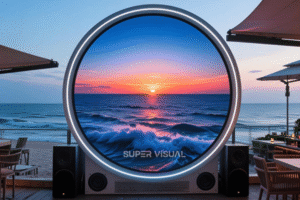
High-end digital, jewelry, and cultural stores prefer smaller 0.5-to-2-meter desktop or wall-mounted spheres. These compact devices offer a complete 360-degree view of complex premium products. Thus, they successfully fix the viewing blind spots of flat digital signage.
Trade Exhibitions
Exhibitors deploy large, ultra-bright spheres inside busy convention centers. These striking structures grab the attention of buyers from long distances, maximizing corporate brand exposure during crowded trade events.
Entertainment: Immersive Experiential Upgrades
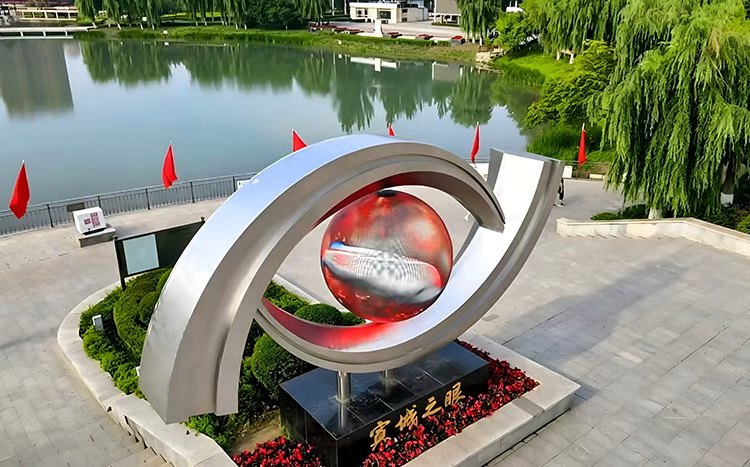
The entertainment sector utilizes Commercial LED Spherical Displays to create immediate experiential value. This segment primarily covers live concert stages, premium dome cinemas, and modern theme parks.
On live concert stages, designers use spherical screens as dynamic auxiliary visual elements. The 360-degree wrapping visuals blend with stage lighting beautifully. Therefore, the setup eliminates viewing differences between the front and back rows. This solves the major blind-spot issues of traditional flat stage backdrops.
Inside modern theme parks, internal spherical displays create budget-friendly immersive experiences, such as deep-space exploration and deep-sea safaris. Traditional custom dome theaters often require multi-million-dollar investments.
In contrast, the lightweight LED sphere solution costs only one-third of that price. This affordable entry point makes it ideal for small and medium-sized amusement parks. Ultimately, this light-asset approach shortens the investment payback period to just 1.8 years.
Digital Education: Transforming Science and Culture
Driven by digital upgrade policies, science museums, public libraries, and schools are modernizing their exhibition halls. Traditional text boards and projection displays feel boring to younger students. Consequently, actual science conversion rates remain low.
Museums now use compact Commercial LED Spherical Displays to duplicate three-dimensional historical artifacts digitally. This method offers interactive, damage-free digital exhibitions. Therefore, it protects fragile real antiques while educating the general public effectively.
Furthermore, unlike projection systems, an LED sphere display does not require a dark, closed room. It operates flawlessly in open, brightly lit galleries. This daylight visibility perfectly matches the design requirements of modern open-concept museums.
Public Landscapes: Boosting the Night Economy
Urban public landscapes focus heavily on night tourism and city branding. Major cities are upgrading from simple lighting strips to digital media art installations.
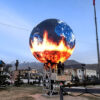
Massive 5-to-10-meter outdoor spherical displays are appearing in city squares and transport hubs. During the daytime, these giant spheres broadcast public service announcements, traffic updates, and government news. At night, they switch to stunning cultural light shows, forming a shining midnight landmark for the city.
Premium Niche Markets: The Blue Ocean Sector
Niche spaces represent a lucrative blue ocean market with a current penetration rate below 8%. This sector includes high-end private clubs, government planning halls, and religious cultural spaces.
| Niche Market Penetration | |
| Premium Niche Spaces (Clubs, Government Halls) | 8% (Blue O.) |
| Mainstream Commercial Markets | 92% |
Religious spaces use low-brightness, warm-light spheres to show subtle cultural graphics, matching the solemn atmosphere. Government exhibition halls utilize spherical screens to display large-scale urban layouts and regional planning maps. This offers a clear, panoramic view of local development.
These niche scenarios demand extreme customization. Buyers require unique exterior colors, silent cooling operations, and low blue-light emissions. Consequently, this segment provides a high-margin growth engine for top-tier manufacturers.
The Three Layers of Commercial Value
Based on extensive project deployment data, LED Spherical Displays deliver three distinct layers of commercial value:
-
The Surface Layer: They create a jaw-dropping visual landmark that instantly boosts offline foot traffic.
-
The Middle Layer: They generate secondary revenue streams through premium advertising and interactive experiences.
-
The Deep Layer: They build a unique spatial brand identity, securing long-term customer loyalty for the venue.
Therefore, smart operators do not view a spherical display as a simple piece of hardware. Instead, they treat it as a powerful operational tool for offline traffic. As the experiential economy grows globally, small-sized, low-power, interactive spherical screens will decentralize further. Ultimately, they will become the standard digital infrastructure for all modern physical spaces.

Add comment