
Global digital infrastructure is growing rapidly. Consequently, the urban night economy is boosting the creative LED market. Among all creative designs, the LED sphere display stands out as the ultimate panoramic solution. Over the past three years, the global market for these spherical screens grew by 27% annually.
Recent supply chain data reveals an amazing fact. Today, Chinese enterprises control over 70% of the global market share. Shenzhen acts as the absolute manufacturing hub for this industry. The city offers a complete supply chain for LED beads, driver ICs, and structural sheet metal. Therefore, top local manufacturers like SUPER VISUAL export advanced products to over 40 countries. These regions include Southeast Asia, the Middle East, Europe, and America. These companies successfully transitioned from low-end OEM assembly to self-developed technology.
However, fierce challenges exist beneath these shiny market numbers. Three major pain points restrict high-quality industry growth. These issues are severe market homogenization, supply chain vulnerabilities, and lagging content ecosystems.
Global Market Landscapes
Foreign spherical LED screen brands mostly come from Europe, Japan, and South Korea. Furthermore, they focus on premium customized services with massive price premiums. These foreign brands only accept million-dollar landmark projects. Additionally, their delivery cycles usually take 6 to 12 months. This slow process only fits niche, high-end scenarios.
In contrast, Chinese manufacturers operate in a tiered competitive structure:
-
Top-tier Tier Brands: These companies master advanced algorithms for curved splicing and pixel-by-pixel viewing angle compensation. Thus, they possess complete hardware and software R&D capabilities. They target large landmarks and science museums.
-
Low-tier Factories: These workshops lack self-developed algorithms. Instead, they buy generic modules to assemble cheap products. They rely purely on low prices to win small orders.
Currently, China has over 500 sphere display enterprises. However, fewer than 20 companies possess full self-developed technologies. Therefore, the vast majority remain stuck in low-barrier assembly roles.
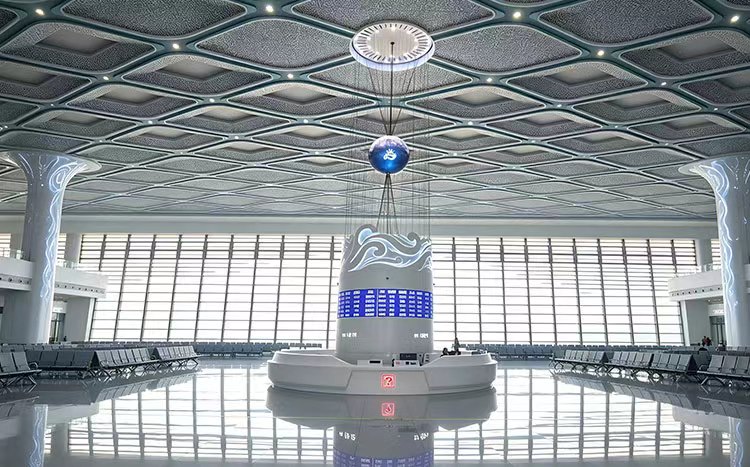
Three Critical Industry Pain Points
1. Homogeneous Price Wars
Since 2022, many traditional LED suppliers entered the spherical display segment. Unfortunately, they lack 3D calibration and structural mechanics capabilities. Thus, they copy existing product designs blindly. This copycat behavior leads to identical diameters, pixel pitches, and appearances.
To grab orders, small factories aggressively cut material costs. They also skip critical curved calibration steps. Consequently, low-end screens show obvious splicing gaps and severe color deviations. These cheap screens experience massive light decay within one year. This chaotic price war crushes profit margins. As a result, top enterprises face massive pressure on R&D investments, slowing down industry innovation.
2. Tech and Supply Chain Vulnerabilities
Technological bottlenecks heavily restrict large-scale projects. For example, calibrating a giant sphere over 8 meters in diameter is incredibly difficult. These screens contain millions of pixels. Thus, manual pixel-by-pixel calibration takes 15 to 20 days. Shockingly, the adoption rate of automated calibration algorithms is below 30%. This delay extends project delivery cycles significantly.
On the supply chain side, high-end fine-pitch driver ICs and ultra-bright outdoor beads still rely on imports. Therefore, geopolitical trade frictions and tariff fluctuations directly impact project costs.
Furthermore, the panoramic content ecosystem is lagging behind. Ninety percent of buyers only provide standard flat videos. These videos do not fit curved spherical surfaces. Meanwhile, professional panoramic content creators are extremely rare. Customized video costs 5 to 8 times more than flat content. Therefore, content creation consumes over 20% of small project budgets, blocking market expansion.
3. Overseas Trade Barriers
Western nations recently launched strict regulations for creative LED equipment. These rules target electromagnetic compatibility, energy saving, and hazardous materials. Consequently, many small Chinese factories cannot pass these tests, blocking their exports.
Simultaneously, foreign local brands work with industry associations to build patent barriers. They initiate lawsuits against curved splicing and hollow cooling structures. This legal pressure squeezes the profit margins of Chinese exporters. Furthermore, demand is surging in Southeast Asia and the Middle East. However, local technical support is missing, raising remote maintenance costs for exporters.
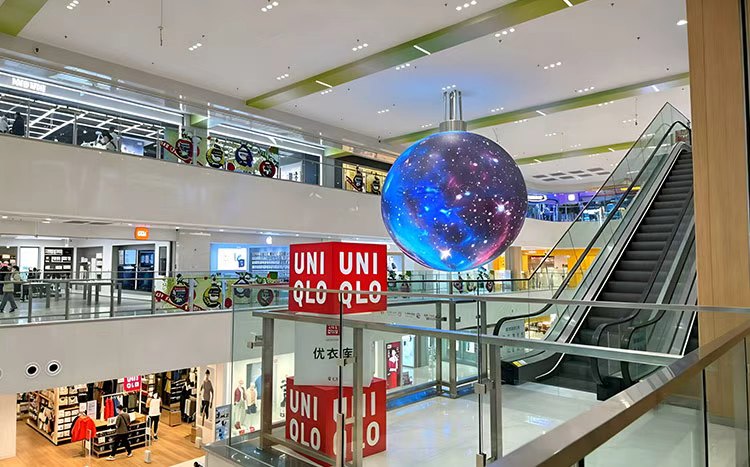
Solutions: The Path Forward
Faced with these challenges, top manufacturers are pursuing three strategic solutions:
Technical Differentiation
Leading brands are abandoning the race for basic size and brightness parameters. Instead, they focus on AI interactivity, low power consumption, and automated calibration. This shift helps them escape low-price traps.
Supply Chain Integration
Top companies are forming deep partnerships with domestic chip and LED bead manufacturers. They are actively replacing imported high-end components with domestic alternatives, reducing import risks.
Localized Service Networks
Exporters are building overseas warehouses and local maintenance teams in Southeast Asia and the Middle East. This strategy shortens service response times and bypasses logistics and tariff risks.
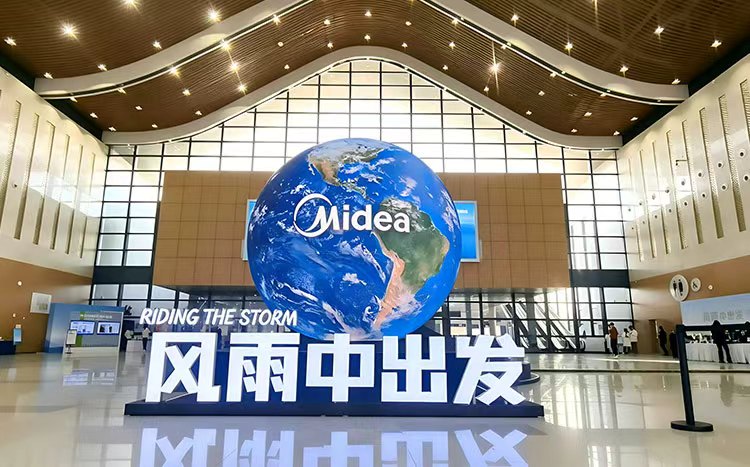
A Shift to Quality
In conclusion, the LED sphere display Market industry will face a massive reshuffle soon. Over the next two years, small assemblers without technology will exit the market. Therefore, market concentration will increase. Meanwhile, China is releasing national standards for creative LED displays. These new rules will fill gaps in protective, visual, and mechanical testing, regulating market competition.
For Chinese enterprises, utilizing complete supply chains is vital. They must fix content shortages and overseas service gaps to keep their global share. The scale expansion phase is over. Ultimately, the Chinese spherical display industry is entering a new era of technological competition.


Add comment